本文章仅用于本人学习笔记记录
微信:A20991212A(如本文档内容侵权了您的权益,请您通过微信联系到我)
原型模式介绍
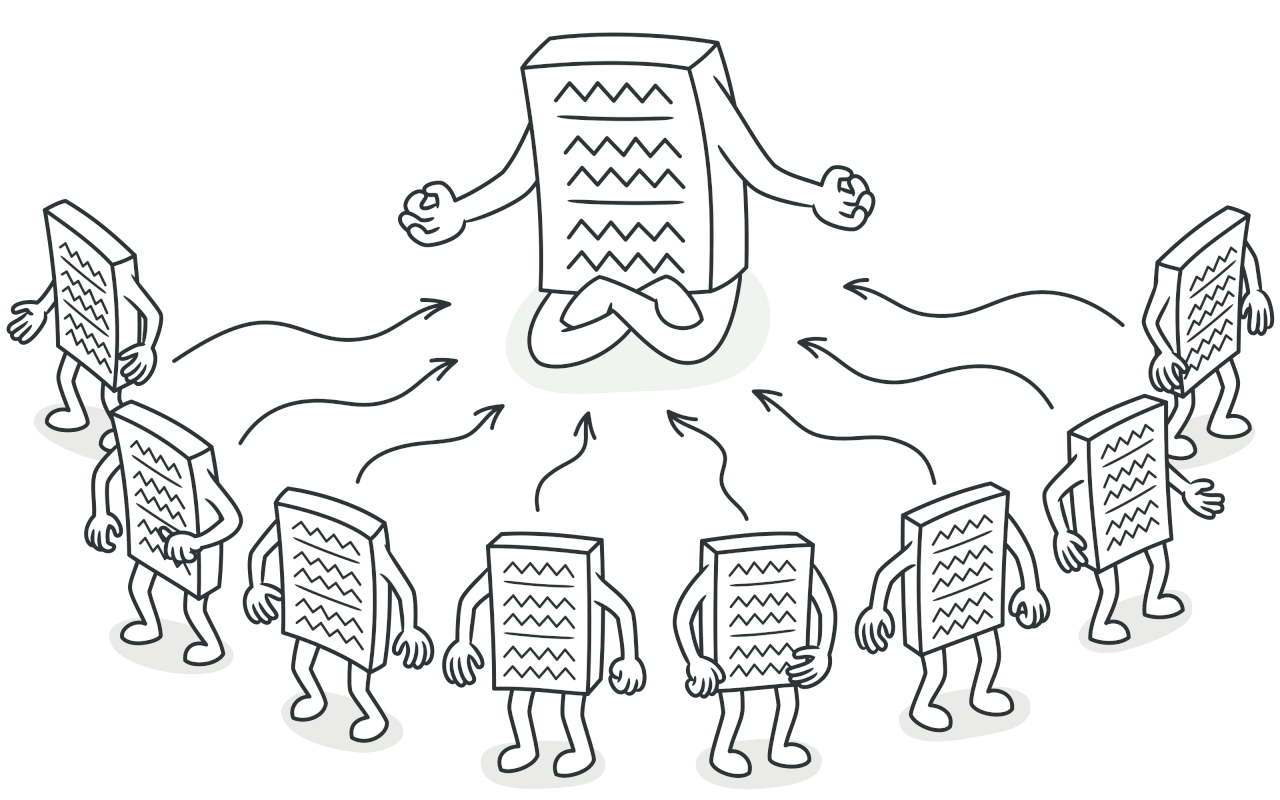
原型模式主要解决的问题就是创建重复对象,而这部分对象内容本身比较复杂,生成过程可能从库或者RPC接口中获取数据的耗时较长,因此采用克隆的方式节省时间。
其实这种场景经常出现在我们的身边,只不过很少用到自己的开发中,就像:
经常Ctrl+C、Ctrl+V,复制粘贴代码。
Java多数类中提供的API方法;Object clone()。
简单例子

每个人都经历过考试,从纸制版到上机答题,大大小小也有几百场。而以前坐在教室里答题身边的人都是一套试卷,考试的时候还能偷摸或者别人给发信息抄一抄答案。
但从一部分可以上机考试的内容开始,在保证大家的公平性一样的题目下,开始出现试题混排更有做的好的答案选项也混排。这样大大的增加了抄的成本,也更好的做到了考试的公平性。
需要实现一个上机考试抽题的服务,因此在这里建造一个题库题目的场景类信息,用于创建;选择题、问答题。
场景模拟工程
itstack-demo-design-4-00
└── src
    └── main
        └── java
            └── org.itstack.demo.design
                ├── AnswerQuestion.java
                └── ChoiceQuestion.java
在这里模拟了两个试卷题目的类;ChoiceQuestion(选择题)、AnswerQuestion(问答题)。如果是实际的业务场景开发中,会有更多的题目类型,可以回忆一下你的高考试卷。
场景简述
选择题
public class ChoiceQuestion {

    private String name;                 // 题目
    private Map<String, String> option;  // 选项;A、B、C、D
    private String key;                  // 答案;B

    public ChoiceQuestion() {
    }

    public ChoiceQuestion(String name, Map<String, String> option, String key) {
        this.name = name;
        this.option = option;
        this.key = key;
    }

    // ...get/set
}
问答题
public class AnswerQuestion {

    private String name;  // 问题
    private String key;   // 答案

    public AnswerQuestion() {
    }

    public AnswerQuestion(String name, String key) {
        this.name = name;
        this.key = key;
    }

    // ...get/set
}
用一坨坨代码实现
在以下的例子中我们会按照每一个用户创建试卷的题目,并返回给调用方。
工程结构
itstack-demo-design-4-01
└── src
    └── main
        └── java
            └── org.itstack.demo.design
                └── QuestionBankController.java
一把梭实现需求
一个类几千行的代码你是否见过,嚯?那今天就再让你见识一下有这样潜质的类!
public class QuestionBankController {

    public String createPaper(String candidate, String number) {

        List<ChoiceQuestion> choiceQuestionList = new ArrayList<ChoiceQuestion>();
        List<AnswerQuestion> answerQuestionList = new ArrayList<AnswerQuestion>();

        Map<String, String> map01 = new HashMap<String, String>();
        map01.put("A", "JAVA2 EE");
        map01.put("B", "JAVA2 Card");
        map01.put("C", "JAVA2 ME");
        map01.put("D", "JAVA2 HE");
        map01.put("E", "JAVA2 SE");

        Map<String, String> map02 = new HashMap<String, String>();
        map02.put("A", "JAVA程序的main方法必须写在类里面");
        map02.put("B", "JAVA程序中可以有多个main方法");
        map02.put("C", "JAVA程序中类名必须与文件名一样");
        map02.put("D", "JAVA程序的main方法中如果只有一条语句,可以不用{}(大括号)括起来");

        Map<String, String> map03 = new HashMap<String, String>();
        map03.put("A", "变量由字母、下划线、数字、$符号随意组成;");
        map03.put("B", "变量不能以数字作为开头;");
        map03.put("C", "A和a在java中是同一个变量;");
        map03.put("D", "不同类型的变量,可以起相同的名字;");

        Map<String, String> map04 = new HashMap<String, String>();
        map04.put("A", "STRING");
        map04.put("B", "x3x;");
        map04.put("C", "void");
        map04.put("D", "de$f");

        Map<String, String> map05 = new HashMap<String, String>();
        map05.put("A", "31");
        map05.put("B", "0");
        map05.put("C", "1");
        map05.put("D", "2");

        choiceQuestionList.add(new ChoiceQuestion("JAVA所定义的版本中不包括", map01, "D"));
        choiceQuestionList.add(new ChoiceQuestion("下列说法正确的是", map02, "A"));
        choiceQuestionList.add(new ChoiceQuestion("变量命名规范说法正确的是", map03, "B"));
        choiceQuestionList.add(new ChoiceQuestion("以下()不是合法的标识符", map04, "C"));
        choiceQuestionList.add(new ChoiceQuestion("表达式(11+3*8)/4%3的值是", map05, "D"));
        answerQuestionList.add(new AnswerQuestion("小红马和小黑马生的小马几条腿", "4条腿"));
        answerQuestionList.add(new AnswerQuestion("铁棒打头疼还是木棒打头疼", "头最疼"));
        answerQuestionList.add(new AnswerQuestion("什么床不能睡觉", "牙床"));
        answerQuestionList.add(new AnswerQuestion("为什么好马不吃回头草", "后面的草没了"));

        // 输出结果
        StringBuilder detail = new StringBuilder("考生:" + candidate + "\r\n" +
                "考号:" + number + "\r\n" +
                "--------------------------------------------\r\n" +
                "一、选择题" + "\r\n\n");

        for (int idx = 0; idx < choiceQuestionList.size(); idx++) {
            detail.append("第").append(idx + 1).append("题:").append(choiceQuestionList.get(idx).getName()).append("\r\n");
            Map<String, String> option = choiceQuestionList.get(idx).getOption();
            for (String key : option.keySet()) {
                detail.append(key).append(":").append(option.get(key)).append("\r\n");
                ;
            }
            detail.append("答案:").append(choiceQuestionList.get(idx).getKey()).append("\r\n\n");
        }

        detail.append("二、问答题" + "\r\n\n");

        for (int idx = 0; idx < answerQuestionList.size(); idx++) {
            detail.append("第").append(idx + 1).append("题:").append(answerQuestionList.get(idx).getName()).append("\r\n");
            detail.append("答案:").append(answerQuestionList.get(idx).getKey()).append("\r\n\n");
        }

        return detail.toString();
    }

}
这样的代码往往都非常易于理解,要什么程序就给什么代码,不面向对象,只面向过程。不考虑扩展性,能用就行。
以上的代码主要就三部分内容;首先创建选择题和问答题到集合中、定义详情字符串包装结果、返回结果内容。
但以上的代码有一个没有实现的地方就是不能乱序,所有人的试卷顺序都是一样的。如果需要加乱序也是可以的,但复杂度又会增加。
测试验证
@Test
public void test_QuestionBankController() {
    QuestionBankController questionBankController = new QuestionBankController();
    System.out.println(questionBankController.createPaper("花花", "1000001921032"));
    System.out.println(questionBankController.createPaper("豆豆", "1000001921051"));
    System.out.println(questionBankController.createPaper("大宝", "1000001921987"));
}
原型模式重构代码
原型模式主要解决的问题就是创建大量重复的类,而我们模拟的场景就需要给不同的用户都创建相同的试卷,但这些试卷的题目不便于每次都从库中获取,甚至有时候需要从远程的RPC中获取。这样都是非常耗时的,而且随着创建对象的增多将严重影响效率。
在原型模式中所需要的非常重要的手段就是克隆,在需要用到克隆的类中都需要实现 implements Cloneable 接口。
工程结构
itstack-demo-design-4-02
└── src
    ├── main
    │   └── java
    │       └── org.itstack.demo.design
    │           ├── QuestionBank.java
    │           └── QuestionBankController.java
    └── test
         └── java
             └── org.itstack.demo.design.test
                 └── ApiTest.java
原型模式模型结构
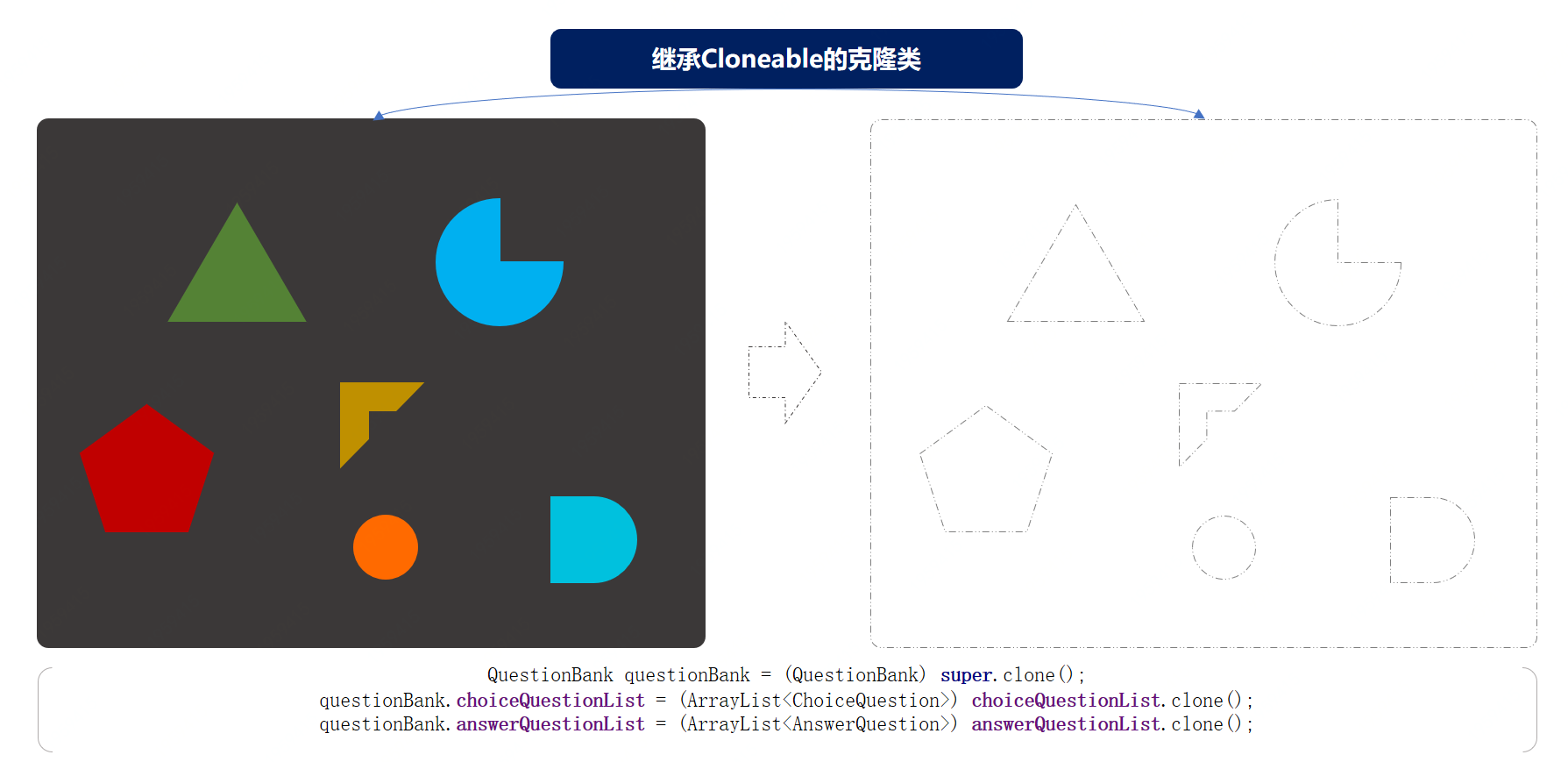
工程中包括了核心的题库类QuestionBank,题库中主要负责将各个的题目进行组装最终输出试卷。
代码实现
克隆对象处理类
public class QuestionBank implements Cloneable {

    private String candidate; // 考生
    private String number;    // 考号

    private ArrayList<ChoiceQuestion> choiceQuestionList = new ArrayList<ChoiceQuestion>();
    private ArrayList<AnswerQuestion> answerQuestionList = new ArrayList<AnswerQuestion>();

    public QuestionBank append(ChoiceQuestion choiceQuestion) {
        choiceQuestionList.add(choiceQuestion);
        return this;
    }

    public QuestionBank append(AnswerQuestion answerQuestion) {
        answerQuestionList.add(answerQuestion);
        return this;
    }

    @Override
    public Object clone() throws CloneNotSupportedException {
        QuestionBank questionBank = (QuestionBank) super.clone();
        questionBank.choiceQuestionList = (ArrayList<ChoiceQuestion>) choiceQuestionList.clone();
        questionBank.answerQuestionList = (ArrayList<AnswerQuestion>) answerQuestionList.clone();

        // 题目乱序
        Collections.shuffle(questionBank.choiceQuestionList);
        Collections.shuffle(questionBank.answerQuestionList);

        return questionBank;
    }

    public void setCandidate(String candidate) {
        this.candidate = candidate;
    }

    public void setNumber(String number) {
        this.number = number;
    }

    @Override
    public String toString() {

        StringBuilder detail = new StringBuilder("考生:" + candidate + "\r\n" +
                "考号:" + number + "\r\n" +
                "--------------------------------------------\r\n" +
                "一、选择题" + "\r\n\n");

        for (int idx = 0; idx < choiceQuestionList.size(); idx++) {
            detail.append("第").append(idx + 1).append("题:").append(choiceQuestionList.get(idx).getName()).append("\r\n");
            Map<String, String> option = choiceQuestionList.get(idx).getOption();
            for (String key : option.keySet()) {
                detail.append(key).append(":").append(option.get(key)).append("\r\n");;
            }
            detail.append("答案:").append(choiceQuestionList.get(idx).getKey()).append("\r\n\n");
        }

        detail.append("二、问答题" + "\r\n\n");

        for (int idx = 0; idx < answerQuestionList.size(); idx++) {
            detail.append("第").append(idx + 1).append("题:").append(answerQuestionList.get(idx).getName()).append("\r\n");
            detail.append("答案:").append(answerQuestionList.get(idx).getKey()).append("\r\n\n");
        }

        return detail.toString();
    }

}
- 两个append(),对各项题目的添加,有点像我们在建造者模式中使用的方式,添加装修物料。
- clone() ,这里的核心操作就是对对象的复制,这里的复制不只是包括了本身,同时对两个集合也做了复制。只有这样的拷贝才能确保在操作克隆对象的时候不影响原对象。
- 乱序操作,在list集合中有一个方法,Collections.shuffle,可以将原有集合的顺序打乱,输出一个新的顺序。在这里我们使用此方法对题目进行乱序操作。
初始化试卷数据
public class QuestionBankController {

    private QuestionBank questionBank = new QuestionBank();

    public QuestionBankController() {

        Map<String, String> map01 = new HashMap<String, String>();
        map01.put("A", "JAVA2 EE");
        map01.put("B", "JAVA2 Card");
        map01.put("C", "JAVA2 ME");
        map01.put("D", "JAVA2 HE");
        map01.put("E", "JAVA2 SE");

        Map<String, String> map02 = new HashMap<String, String>();
        map02.put("A", "JAVA程序的main方法必须写在类里面");
        map02.put("B", "JAVA程序中可以有多个main方法");
        map02.put("C", "JAVA程序中类名必须与文件名一样");
        map02.put("D", "JAVA程序的main方法中如果只有一条语句,可以不用{}(大括号)括起来");

        Map<String, String> map03 = new HashMap<String, String>();
        map03.put("A", "变量由字母、下划线、数字、$符号随意组成;");
        map03.put("B", "变量不能以数字作为开头;");
        map03.put("C", "A和a在java中是同一个变量;");
        map03.put("D", "不同类型的变量,可以起相同的名字;");

        Map<String, String> map04 = new HashMap<String, String>();
        map04.put("A", "STRING");
        map04.put("B", "x3x;");
        map04.put("C", "void");
        map04.put("D", "de$f");

        Map<String, String> map05 = new HashMap<String, String>();
        map05.put("A", "31");
        map05.put("B", "0");
        map05.put("C", "1");
        map05.put("D", "2");

        questionBank.append(new ChoiceQuestion("JAVA所定义的版本中不包括", map01, "D"))
                .append(new ChoiceQuestion("下列说法正确的是", map02, "A"))
                .append(new ChoiceQuestion("变量命名规范说法正确的是", map03, "B"))
                .append(new ChoiceQuestion("以下()不是合法的标识符",map04, "C"))
                .append(new ChoiceQuestion("表达式(11+3*8)/4%3的值是", map05, "D"))
                .append(new AnswerQuestion("小红马和小黑马生的小马几条腿", "4条腿"))
                .append(new AnswerQuestion("铁棒打头疼还是木棒打头疼", "头最疼"))
                .append(new AnswerQuestion("什么床不能睡觉", "牙床"))
                .append(new AnswerQuestion("为什么好马不吃回头草", "后面的草没了"));
    }

    public String createPaper(String candidate, String number) throws CloneNotSupportedException {
        QuestionBank questionBankClone = (QuestionBank) questionBank.clone();
        questionBankClone.setCandidate(candidate);
        questionBankClone.setNumber(number);
        return questionBankClone.toString();
    }

}
- 这个类的内容就比较简单了,主要提供对试卷内容的模式初始化操作(所有考生试卷一样,题目顺序不一致)。
- 以及对外部提供创建试卷的方法,在创建的过程中使用的是克隆的方式;(QuestionBank) questionBank.clone();,并最终返回试卷信息。
总结
- 以上的实际场景模拟了原型模式在开发中重构的作用,但是原型模式的使用频率确实不是很高。如果有一些特殊场景需要使用到,也可以按照此设计模式进行优化。
- 另外原型设计模式的优点包括;便于通过克隆方式创建复杂对象、也可以避免重复做初始化操作、不需要与类中所属的其他类耦合等。但也有一些缺点如果对象中包括了循环引用的克隆,以及类中深度使用对象的克隆,都会使此模式变得异常麻烦。
- 原型模式主要解决的问题就是创建重复对象,而这部分对象内容本身比较复杂,生成过程可能从库或者RPC接口中获取数据的耗时较长,因此采用克隆的方式节省时间。
- 就是在类中克隆不同的当前类和其他操作,减少了代码冗余。